
 Film · 2004Fighter in the Wind바람의 파이터 · ★ 7.1
DongPhym
173 series and films from Korea, Vietnam, China and Thailand, 1992 to 2026, with 2,741 episodes listed.
DongPhym picks for you
View all (173) ›Film · 2004Fighter in the Wind바람의 파이터 · ★ 7.1 Film · 2012Soar Into the SunR2B: 리턴 투 베이스 · ★ 6.6
 12 epsHead Over Heels견우와 선녀 · ★ 8.7
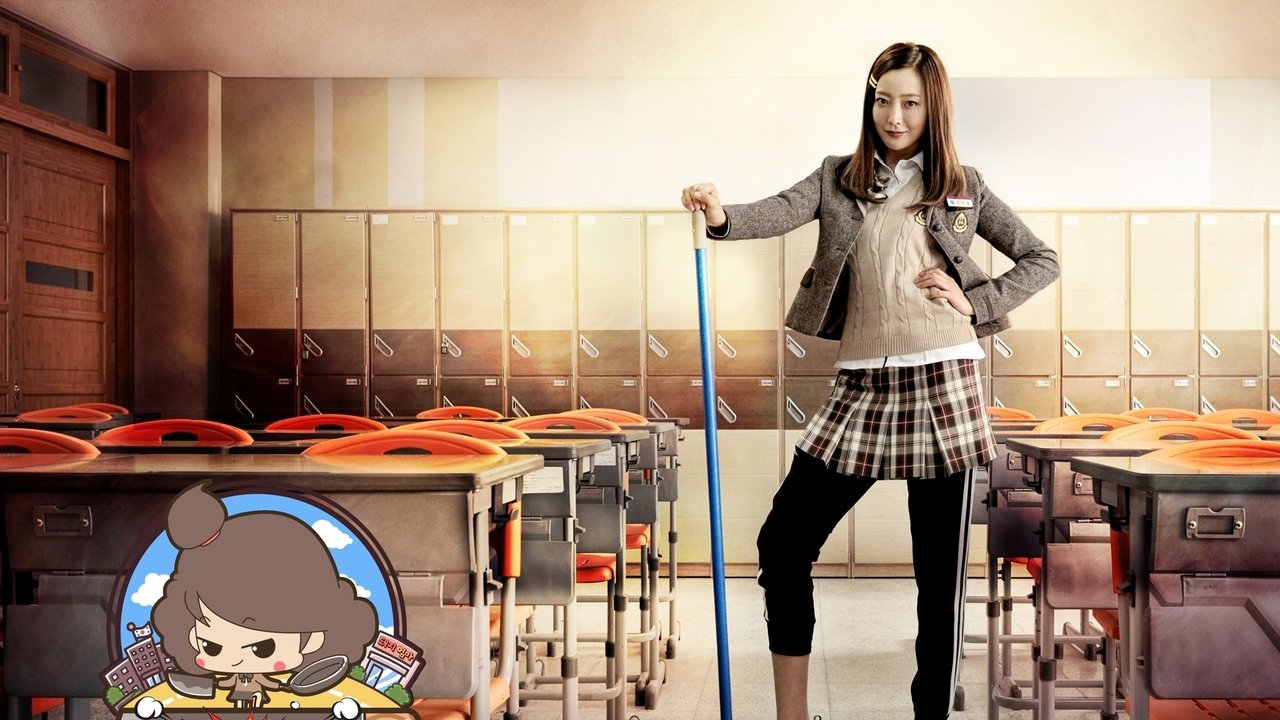 16 epsAngry Mom앵그리맘 · ★ 7.7
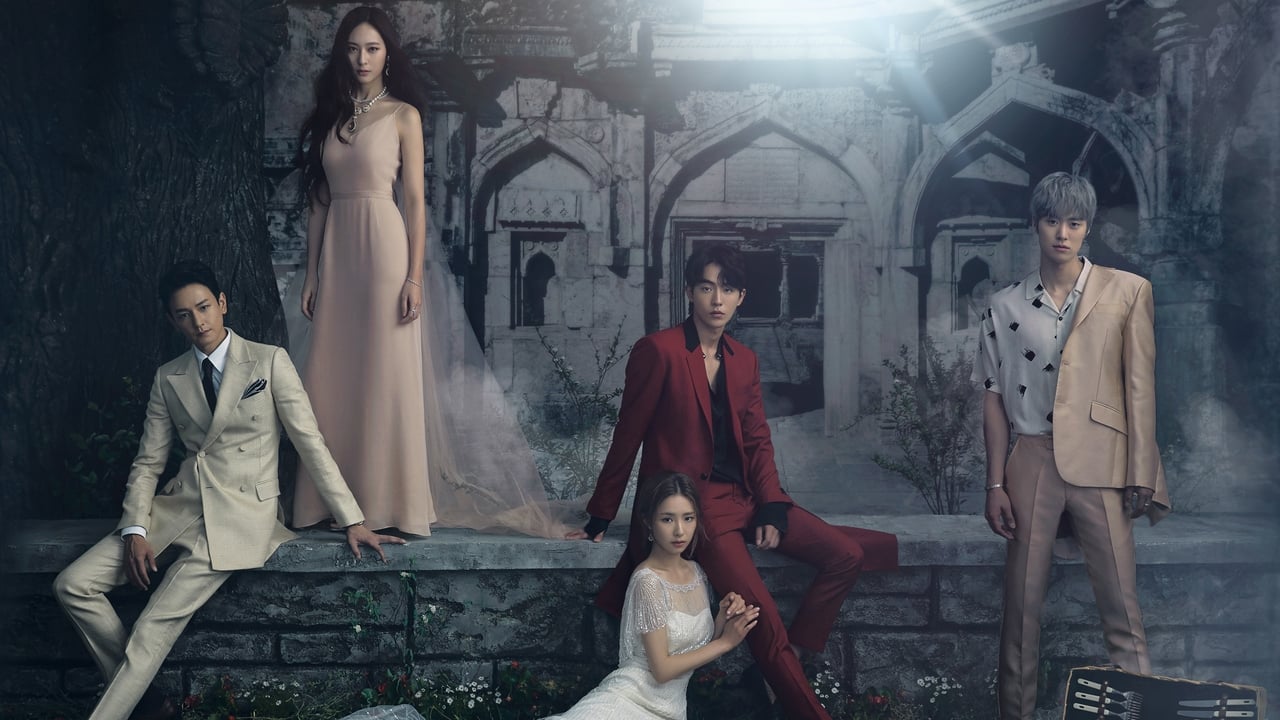 16 epsThe Bride of Habaek하백의 신부 · ★ 6.9
 20 eps49 Days49일 · ★ 8.1
 12 epsTale of the Nine Tailed 1938구미호뎐1938 · ★ 8.1
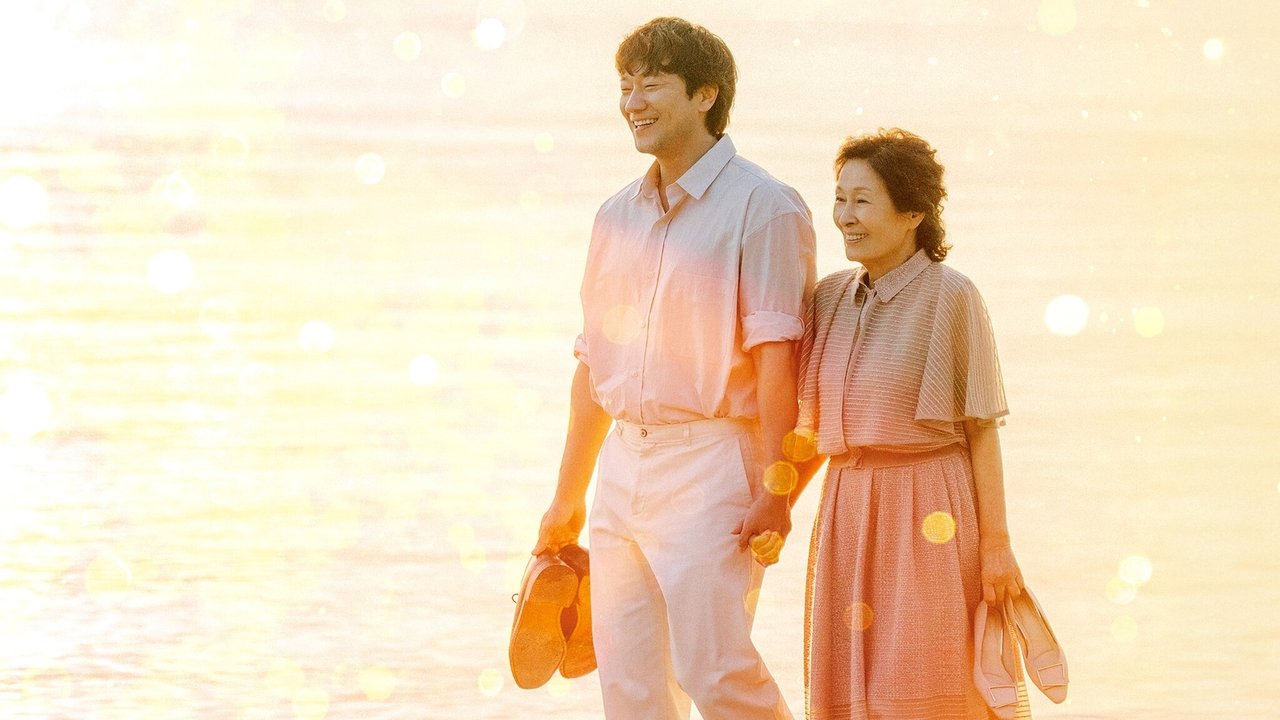 12 epsHeavenly Ever After천국보다 아름다운 · ★ 8.5
Korean dramas
View all (104) › 16 eps
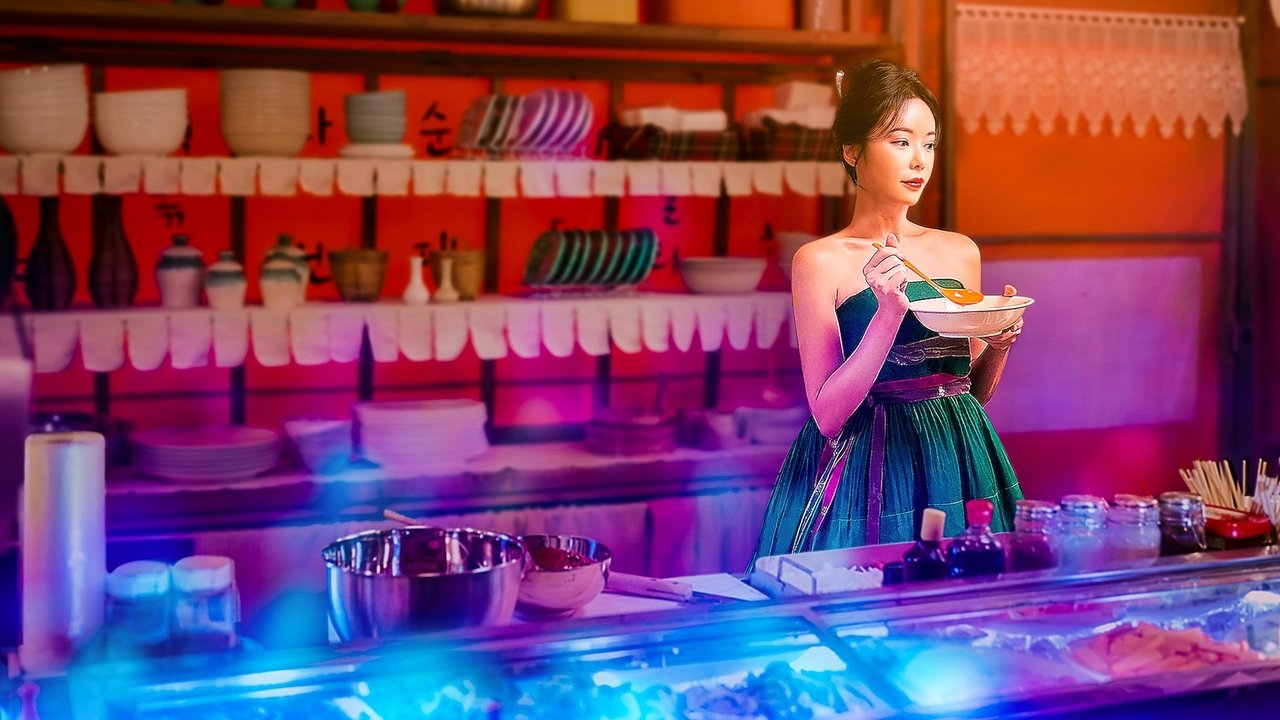 12 eps
 40 eps
 Film · 2011
 20 eps
 16 eps
 12 eps
 24 eps
Vietnamese cinema
View all (48) › Film · 2008Owl and the SparrowCú và chim se sẻ · ★ 6.3
 Film · 2004Buffalo BoyMùa len trâu · ★ 6.5
 Film · 2015Sweet 20Em Là Bà Nội Của Anh · ★ 6.7
 Film · 2017The Girl from YesterdayCô Gái Đến Từ Hôm Qua · ★ 6.6
 Film · 2010Fool for LoveĐể Mai Tính · ★ 7.5
 Film · 2016Taxi, What's Your Name?Taxi, em tên gì? · ★ 6.6
 Film · 2006The Story of PaoChuyện của Pao · ★ 7.5
 Film · 2017Kiss & SpellYêu Đi Đừng Sợ · ★ 5.9
Chinese and Thai series
View all (21) ›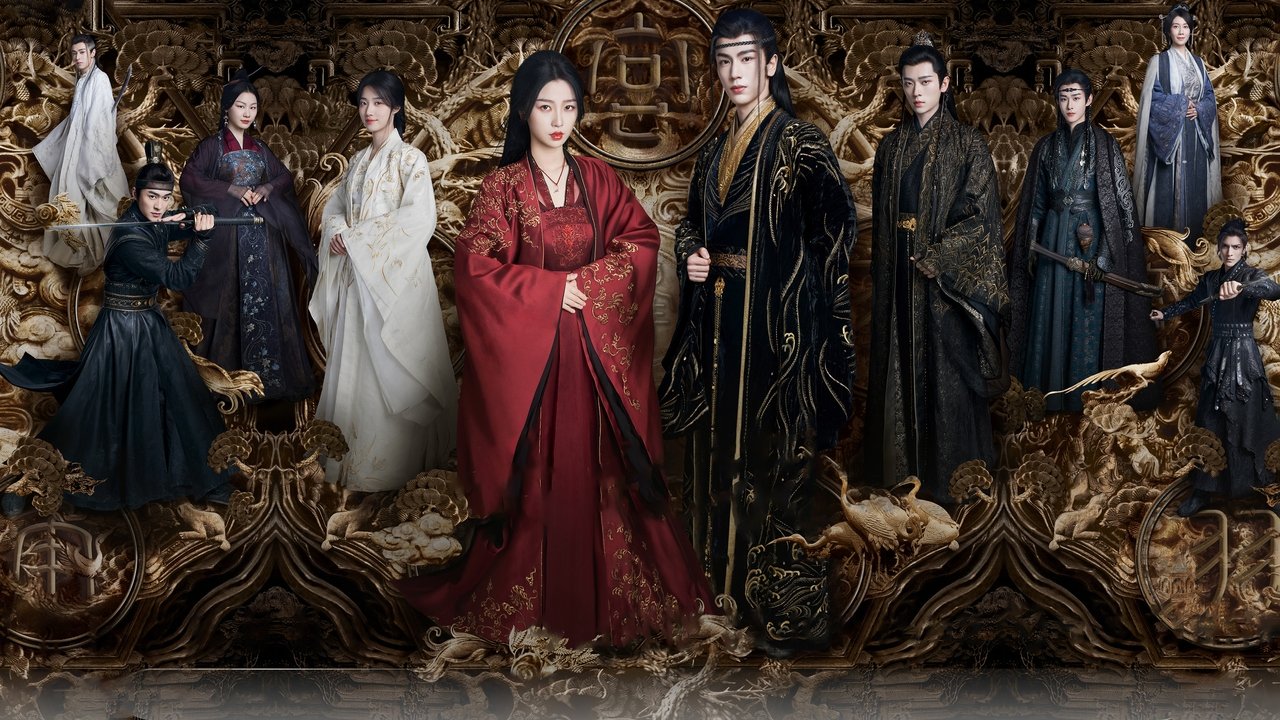 24 eps
 13 eps
 20 eps
 39 eps
Historical dramas
View all (41) › 12 eps
 50 eps
 20 eps
 16 eps
Fantasy
View all (23) › 12 eps
 16 eps
 12 eps
 12 eps
The DongPhym guide to Asian drama
DongPhym: Korean dramas, Vietnamese films and Asian series, with Head Over Heels, Heavenly Ever After, Angry Mom, 49 Days, When the Camellia Blooms, Youth of May, Sweet 20 and Love Destiny
Asian television drama has become one of the great pleasures of the streaming age. A Korean series will set a love story in a seaside town and fill it with neighbours you come to know by name. A historical epic will spend fifty episodes on the founding of a dynasty and make every council meeting gripping. A Vietnamese comedy will send a grandmother back to her twentieth year, and a Thai romance will drop a modern student into the court of old Ayutthaya. DongPhym is a guide to 173 series and films of this kind, made between 1992 and 2026 in Korea, Vietnam, China, Taiwan and Thailand. It sorts them by country and by genre, and gives each a page with its cast, its episodes and a Watch now button that leads to the official services carrying it.
The catalogue holds 127 series and 46 films, and the series have 2,741 episodes between them. One hundred and four titles are Korean, forty-eight Vietnamese and twenty-one Chinese or Thai. Sorted by genre, forty-one are historical dramas, twenty-three are fantasies, sixty-four are romantic comedies and forty-five are dramas. This guide takes the three countries first, then the four genres, then the short and long series, school stories and family choices, and it closes with the search, My List and a plan for a first fortnight.
What DongPhym is
DongPhym is a viewing guide. Each of its 173 pages describes one series or film: its story, the year and country in which it was made, its leading actors, its director and, for a series, the order of its seasons and episodes with their dates. At the top of each page is a Watch now button with a country selector beside it. Choose the country you are in, press the button, and JustWatch opens with the services that carry the title there, whether by subscription, rental, purchase or free with advertising. The how to watch page sets out the three steps in brief.
The selection was made by hand, one summary at a time, with a mixed household in mind. It favours romance, comedy, family stories, fantasy and costume drama, the kinds of series that parents, grown children and grandparents can follow together over several weeks. Crime thrillers and the harsher revenge melodramas were set aside, which is why some famous titles are absent and some gentler ones have been given room.
The guide is written in English for viewers anywhere. The series keep their own languages, Korean, Vietnamese, Mandarin and Thai, and are widely available with subtitles; each title page states the original language and gives the original title beside the English one.
How the pages are arranged
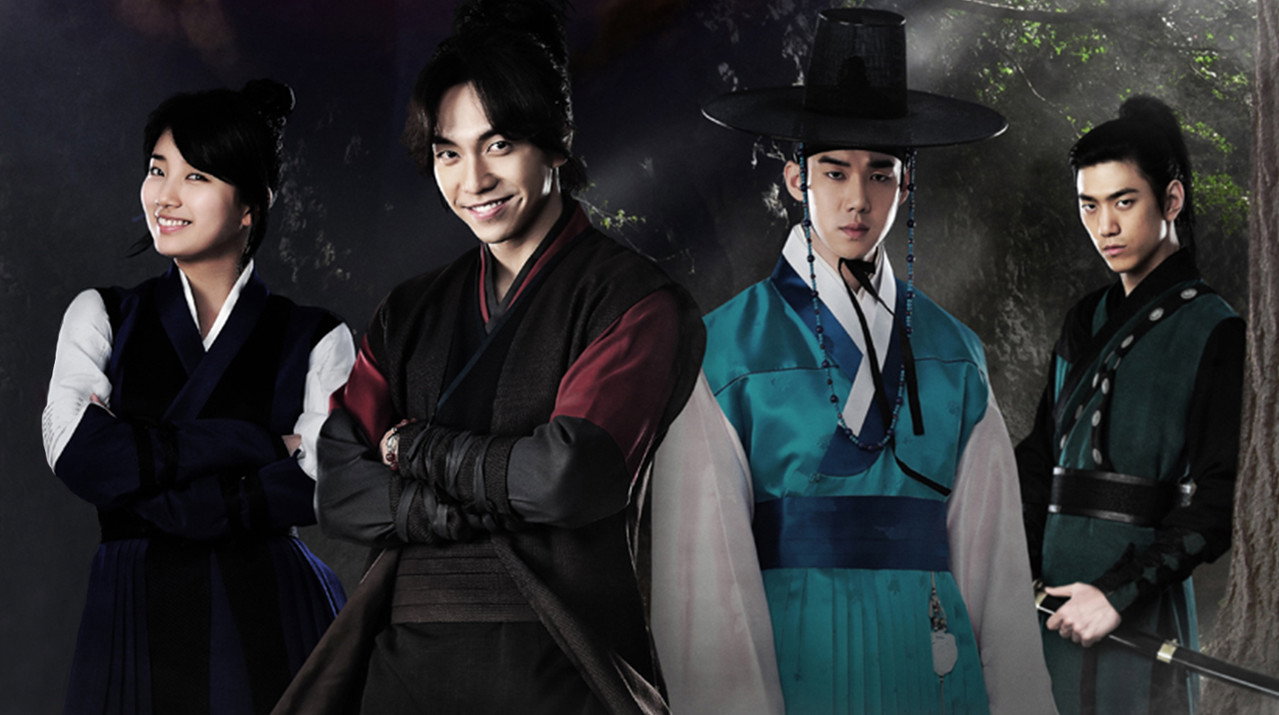
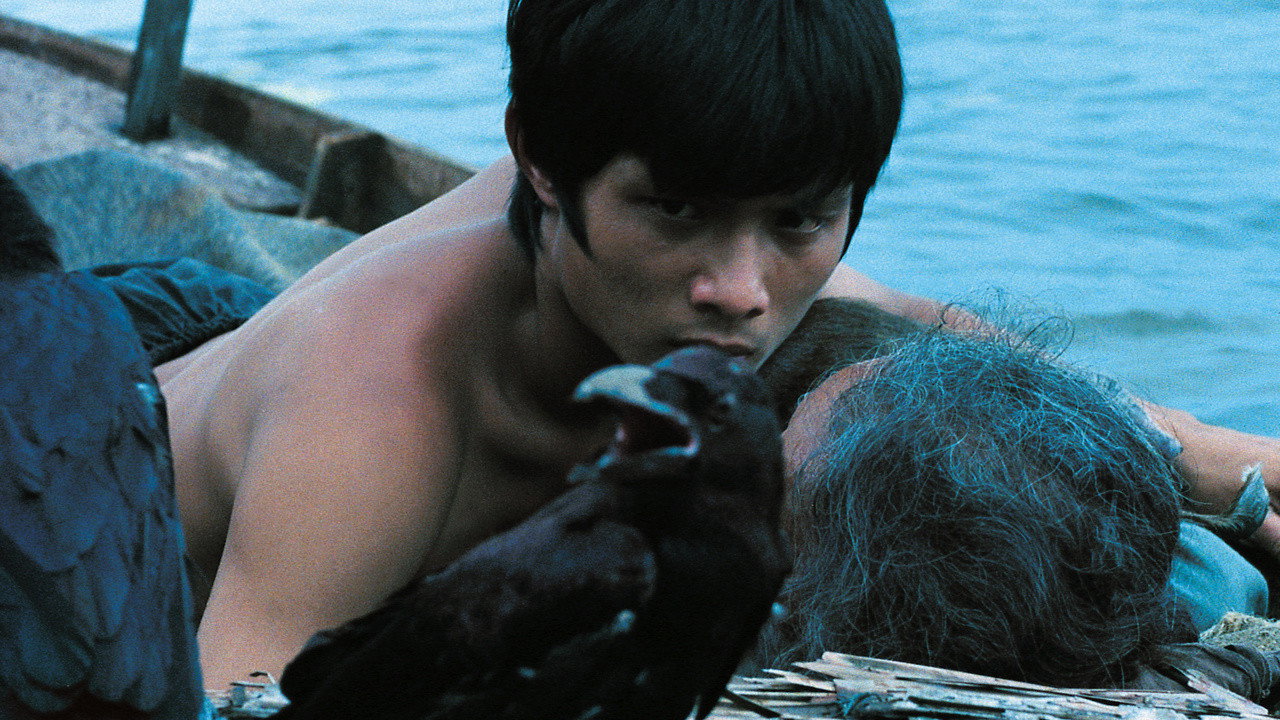
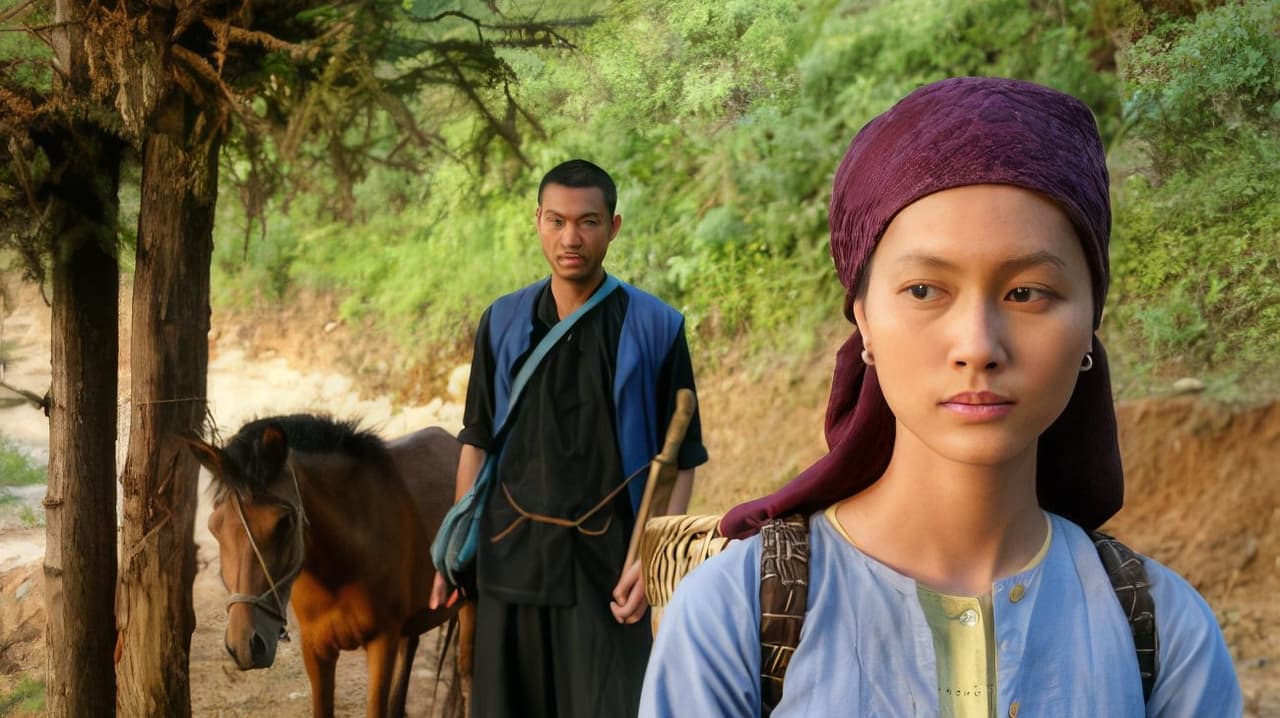
The site wears midnight blue. A darker bar runs across the top with the logo, the menu in capitals, the search field and the red My List button, and highlights throughout are a sharp lime yellow. The home page is built from rows of wide stills, four to a row. Each still carries a small badge in its top left corner giving the number of episodes, or the word Film and the year, and beneath it the title in bold capitals with the original title and the score in smaller type.
The first row holds DongPhym's picks from the whole catalogue. Then come rows for Korean dramas, Vietnamese cinema, Chinese and Thai series, historical dramas and fantasy, each with a link to the complete list. At the right of the page stands a ranked column: the ten top-rated titles as dark picture strips, each with a numbered corner, the first three in red. Under the ranking is a list of the remaining genres and lists with the number of titles in each. On a telephone the stills stand two to a row, the ranking moves below them, and the three-bar button opens the menu with a search field of its own.
Korea
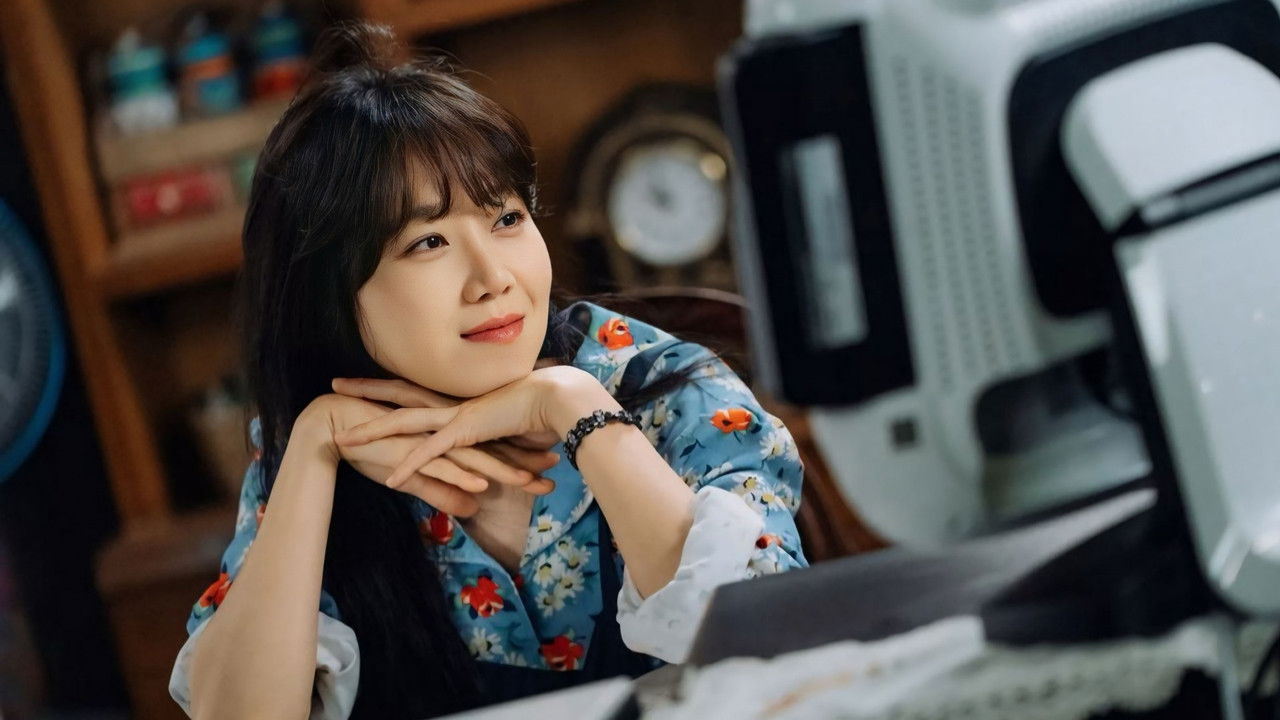
One hundred and four titles are Korean, 101 series and three films, and the Korea guide suggests where to begin. The most loved of them is When the Camellia Blooms. Dongbaek, played by Kong Hyo-jin, is a single mother who has opened a small bar called Camellia in the fishing town of Ongsan, where the market women disapprove of her on principle. A local policeman, cheerful and stubborn, played by Kang Ha-neul, decides that she is the most admirable person he has ever met and tells her so daily. The series is a romance, a comedy of small-town manners and a portrait of a community that slowly changes its mind; a mystery runs through it, handled with restraint, and viewers who prefer to avoid suspense should know that it is there. It won the grand prize at the Baeksang Arts Awards.
Angry Mom has one of the best premises in Korean drama. Jo Gang-ja, played by Kim Hee-seon, was a legendary fighter in her schooldays; when she learns that her teenage daughter is being bullied, she puts on a uniform and enrols in the same school to find out who is responsible. The comedy is broad, the anger at injustice is real, and Kim You-jung is excellent as the daughter. 49 Days begins with a traffic accident on the eve of a wedding: the bride lies in a coma, and a courteous young reaper offers her a way back if she can find three people outside her family who will shed sincere tears for her within forty-nine days. It is a fantasy about friendship and honesty, and its ending is still discussed.
The newest favourites show how the form keeps renewing itself. Head Over Heels, from 2025, is among the highest-scored titles in the catalogue. Its heroine is a schoolgirl by day and a working shaman by night, and when a new boy walks into her shrine upside down, a sign that his time is short, she resolves to keep him alive. Heavenly Ever After is gentler and stranger: a woman of eighty arrives in the afterlife to find her husband waiting for her in the body of his thirties, exactly as she had asked him to stay, and the two must learn how to be a couple again. The veteran Kim Hye-ja and Son Suk-ku play them, and the series is by turns very funny and very moving. Tale of the Nine Tailed 1938 sends Lee Dong-wook's nine-tailed fox back to the Seoul of 1938 for twelve episodes of adventure and banter.
Youth of May deserves a paragraph of its own. Set in the city of Gwangju in the spring of 1980, it follows a medical student, played by Lee Do-hyun, and a nurse, played by Go Min-si, who meet when he is sent on a blind date in a friend's place. Their courtship, all bicycles, picnics and shy letters, unfolds as the month moves towards events that every Korean viewer knows are coming. The series treats that history with dignity and keeps its attention on the young couple; it is a love story first, and a deeply affecting one.
Korean television is at its most characteristic in the workplace comedy. In Unlock My Boss, the founder of a technology company wakes up to find his mind trapped inside a smartphone, and persuades an unemployed young man who picks it up to take his place as chief executive. Today's Webtoon follows a former judo champion, played by Kim Se-jeong, through her first year as an editor of online comics, with real affection for the craft. In Wok of Love, a star chef who has lost everything takes over the kitchen of a shabby Chinese restaurant whose staff are all former associates of its owner, and Junho, Jung Ryeo-won and Jang Hyuk make a delightful trio. Rich Man, Poor Woman pairs a brilliant programmer who is unable to recognise faces with a job-seeker who remembers everything; Crazy Love sets a secretary against the most arrogant mathematics teacher in Seoul; and Revolutionary Love sends a spoiled heir to live in a studio flat.
A second strand is the healing drama, in which bruised people find a place to rest. Warm and Cozy takes two city dwellers to a restaurant on Jeju Island. Would You Like a Cup of Coffee? is twelve half-hour episodes about a young man learning the barista's trade from a quiet master, with Ong Seong-wu and Park Ho-san. The Package follows a group of Korean tourists and their guide around France. Curtain Call has Kang Ha-neul as an unknown stage actor hired to play the long-lost grandson of a hotel founder in her last months, with Ha Ji-won as the granddaughter who runs the business. Hospital Ship sails with young doctors to islands that lack a clinic, Mental Coach Jegal sits in the office of a sports psychologist, and Diary of a Prosecutor finds comedy in the paperwork of a provincial prosecutors' office, with Lee Sun-kyun and Jung Ryeo-won.
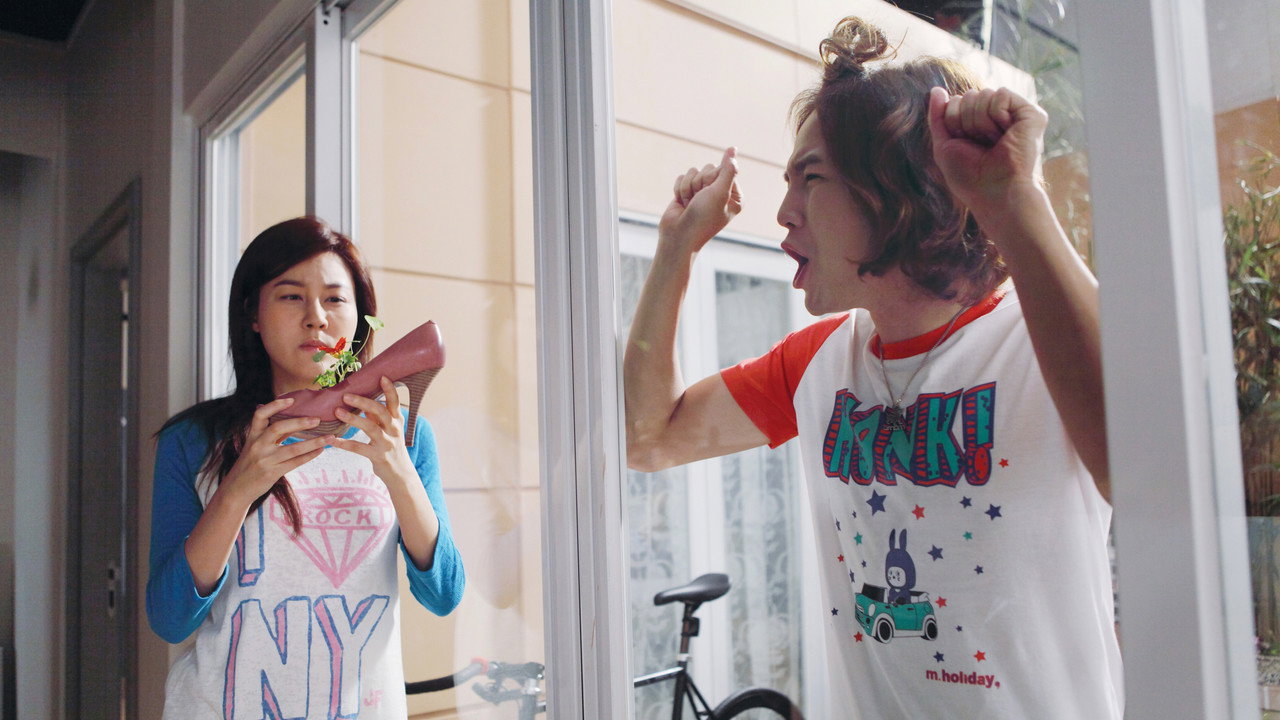
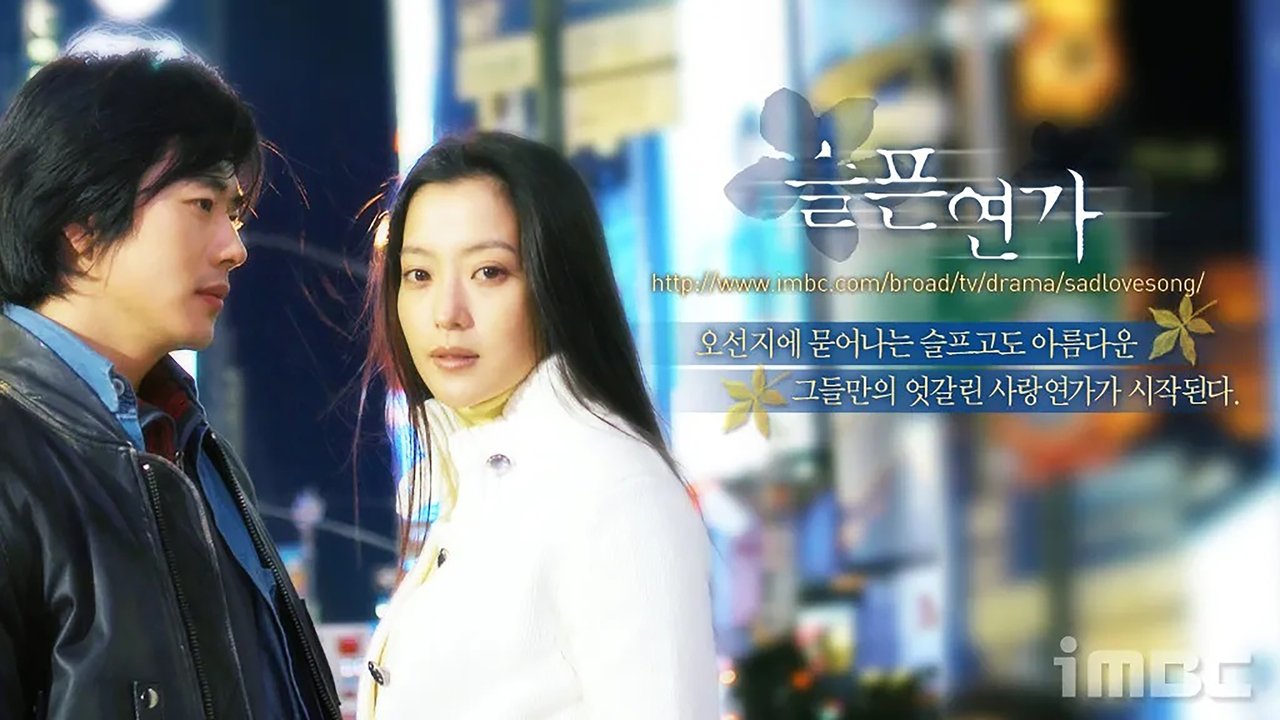
The weekend family serial is represented by Young Lady and Gentleman, fifty-two episodes about a widowed company chairman, his three children and the cheerful young tutor who comes to live in the house; it was the most watched programme in Korea in its season. Music and show business supply Entertainer, in which Ji Sung plays a fallen manager who builds a band from four outsiders, The Heavenly Idol, Miracle and Radio Romance. Older favourites include Sad Love Story and Love Rain, the latter by the director of Winter Sonata, with Jang Keun-suk and Yoona each playing two roles a generation apart, and My Fair Lady, with Yoon Eun-hye as an heiress and Yoon Sang-hyun as her butler. The King 2 Hearts imagines a Korea that still has a royal family and marries its playboy prince, played by Lee Seung-gi, to a North Korean officer, played by Ha Ji-won.
Three Korean films complete the shelf. Fighter in the Wind tells the early life of the karate master Choi Bae-dal. Soar Into the Sun is an aviation adventure with the singer Rain as an air force pilot, and You Are My Pet is a light comedy with Kim Ha-neul and Jang Keun-suk. The many short web dramas are described further on.
Vietnam
Forty-eight titles are Vietnamese, forty-three films and five series, and the Vietnam guide sorts them. Vietnamese cinema has grown quickly since the mid-2000s, and its commercial heart is comedy with a tender streak. Sweet 20 is the model. Mrs Dai is seventy, sharp-tongued and convinced that her family wishes to be rid of her; she has her portrait taken at a mysterious photo studio and walks out twenty years old, played by the singer Miu Lê, with an old lady's opinions and a young woman's voice. The film was the most successful Vietnamese release of its year. The same director and star made The Girl from Yesterday, a schoolyard romance set in the 1990s from a much-loved novel. Go-Go Sisters moves between a group of schoolgirls in the early 1970s and the same friends reunited as women in middle age, and 100 Days of Sunshine, She's the Boss, My Mr. Wife and 200 Pounds Beauty are bright romantic comedies in the same spirit.
The partnership of the director Charlie Nguyen and the comedian Thái Hòa produced some of the biggest hits. In Fool for Love, a hotel porter in a seaside town falls for a lounge singer far above his station and pursues her with hopeless gallantry. Little Teo sends two mismatched half-brothers on a road trip through the Mekong Delta to win back a fiancée. Thái Hòa appears again in the family serial The Apple Tree Blossom and in the 2026 drama Mr. Hero, as a taxi driver caring for a sick daughter. Taxi, What's Your Name? puts an absent-minded scientist and a stern woman driver on the road together, Jackpot is a true story about an honest seller of lottery tickets, and Going Home for Tet is a New Year comedy about two bus drivers and some unexpected passengers.
The quieter films are among the finest. Owl and the Sparrow, made by Stephane Gauger on the streets of Saigon with a tiny crew, follows a ten-year-old girl who runs away from her uncle's factory, sells roses in the city and decides that a lonely zookeeper and a flight attendant ought to meet. It won prizes at festivals around the world. The Story of Pao is set among the Hmong people of the far northern mountains, where a girl goes in search of the mother who left when she was small. Buffalo Boy takes a fifteen-year-old through the flooded Mekong of the 1940s with his family's two buffalo, and The Moon at the Bottom of the Well is a portrait of a village teacher in Hue. The Tailor celebrates the áo dài, the national dress, through a comedy in which the daughter of a famous Saigon tailor in 1969 is flung forward to the present day.
Family feeling runs through the newer releases. Face Off 7: One Wish is the seventh in Lý Hải's hugely popular series and the gentlest: a widow of seventy-three, hurt in a fall, is passed from one busy child to the next and wonders what she has raised. Nắng is about a five-year-old and her mother, who earn their living selling lottery tickets, Leaving Mom about a street barber caring for a mother whose memory is failing, and Maika: The Girl From Another Galaxy is a children's adventure about a boy and a visitor from the stars. Saigon Electric is a dance film about a ribbon dancer from the country and a street crew, Good Morning and Good Night a musical day in the life of two young people on a motorbike, and Ky Nam Inn a romance of 1985 between a young translator of The Little Prince and a widow who cooks for the neighbourhood. The five series include 11 Months and 5 Days, about a young woman's first year in a new city, and Suddenly Happy Family, about three generations in one house.
China and Thailand
Twenty-one series come from China, Taiwan and Thailand, and the guide to the two countries introduces them. Two are classics that every Chinese-speaking family knows. New Legend of Madame White Snake, first shown in 1992, tells the folk tale of a white snake spirit who takes human form and marries a gentle herbalist in Hangzhou, with songs in the manner of traditional opera; Angie Chiu's performance made the fifty episodes a holiday fixture for decades. I Love My Family, from 1993, was the first situation comedy made in Mandarin: 120 episodes in the Beijing flat of a retired official, his two sons, a daughter-in-law and a sharp-witted granddaughter, written with a wit that has kept it in repeats ever since.
Costume drama is the staple of the newer Chinese series. My Journey To You sends a young woman into a secluded clan stronghold under a false identity, where loyalty and affection begin to complicate her mission; it is handsomely designed and briskly told in twenty-four episodes. Stand By Me is set at the Tang court, Be with You in a city of rival martial houses, A Life Time Love and Xuan-Yuan Sword: Han Cloud in worlds of myth, and Beauty Private Kitchen follows a lost princess of the Song dynasty who grows up to be a celebrated cook. Modern stories include the Taiwanese favourites The Prince Who Turns into a Frog, a romance between a hotel heir with amnesia and a village girl that broke rating records in 2005, and Living, a warm family comedy of 2023 about an uncle who comes home after years away, along with Love Under the Full Moon, Stay with Me, Mysterious Love and Best Lover.
Thailand contributes seven series. Love Destiny was a national event in 2018: a kind-hearted archaeology student wakes in the body of a haughty noblewoman in the Ayutthaya of the seventeenth century, startles the household with her modern manners and good humour, and gradually wins over the stern young official to whom she is betrothed. Sales of traditional dress and visits to the old capital's ruins soared while it was on air. The Gifted is a clever school fantasy about a special class whose pupils discover unusual abilities and begin to question how their school is run. My Ambulance is a romance with a touch of magic set in an emergency department, My Forever Sunshine takes a city girl to a farm, and Praomook and Lovey Dovey are light romances.
Historical dramas
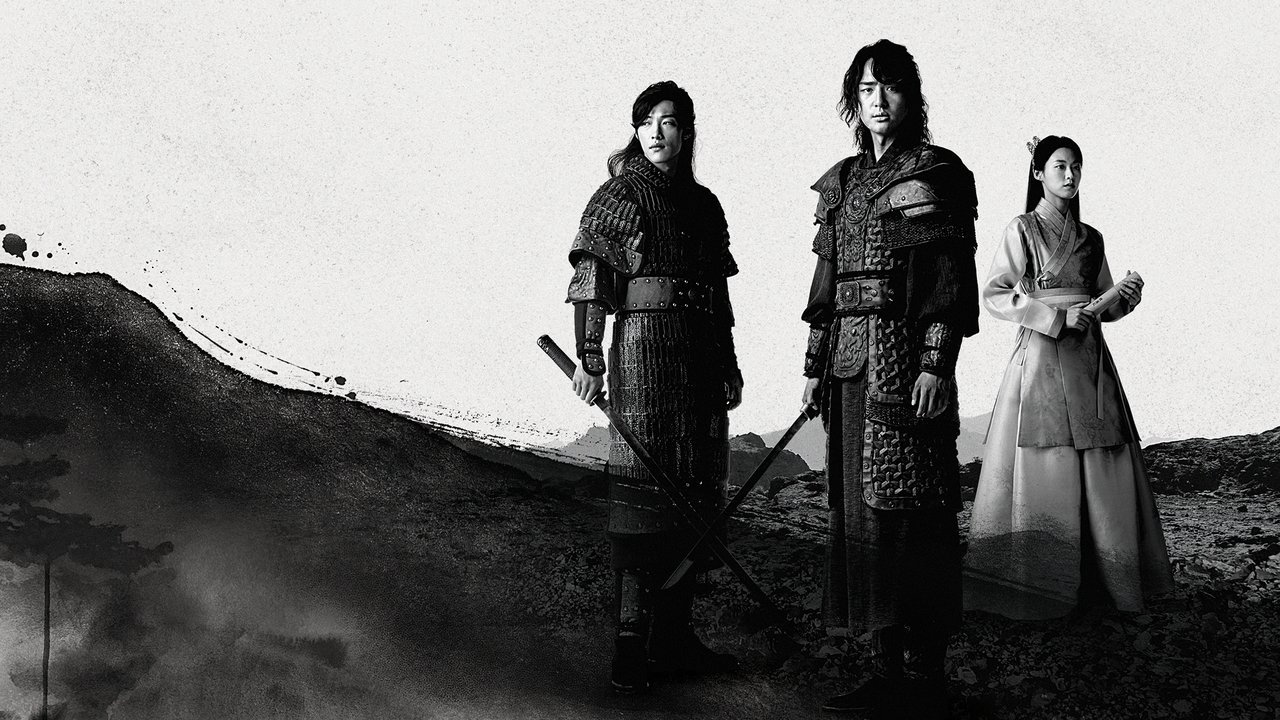
Forty-one titles are set in the past, and the historical guide arranges them. Korean historical drama, known as sageuk, ranges from sober chronicles to romances in period dress, and the catalogue has both. At the serious end stands Six Flying Dragons, fifty episodes on the fall of the Goryeo kingdom and the founding of Joseon at the end of the fourteenth century, seen through six characters, three of them historical and three invented. Yoo Ah-in plays the young prince Yi Bang-won and Kim Myung-min the scholar Jeong Do-jeon, whose alliance and rivalry shape a nation. Its companion Tree with Deep Roots, made by the same writers, is set two generations later, when King Sejong, played by Han Suk-kyu, works in secret on a new alphabet that ordinary people will be able to learn; it turns the invention of the Korean script into a first-rate drama of ideas. My Country: The New Age covers the same founding years through two friends who end on opposite sides.
Romance at court is a genre in itself. The Princess's Man is a Korean Romeo and Juliet: the daughter of the ambitious Grand Prince Suyang falls in love with the son of the minister he means to destroy. Queen For Seven Days tells of the queen whose reign was the shortest in Joseon history, with Park Min-young; Grand Prince and The King in Love are stories of two princes and one woman; and Queen: Love and War follows the selection of a royal bride. Flower Crew: Joseon Marriage Agency plays the same material for comedy, with three stylish matchmakers hired to turn a blacksmith's sweetheart into a lady.
Then there are the heroes of the people. Iljimae, with Lee Joon-gi, is the Korean Robin Hood, an idle fellow by day and a masked thief by night who leaves a painted plum branch at the scene. The Rebel retells the legend of Hong Gil-dong, and Warrior Baek Dong Soo, with Ji Chang-wook, is a tale of swordsmen who guard a prince. The Flower in Prison, by the director of Jewel in the Palace, follows a girl born in a jail who grows up to argue cases for the poor, and Joseon Attorney: A Morality and Haechi share her interest in justice. Bossam: Steal the Fate, Gunman in Joseon and The Royal Gambler are adventures, and Time Slip Dr. Jin sends a modern surgeon back to the nineteenth century, where he must practise medicine with the tools of the day.
Fantasy and history meet in Kangchi, the Beginning, with Lee Seung-gi as a foundling who is half guardian spirit and Suzy as the daughter of a martial arts master, and in Tale of Arang, in which a ghost who has forgotten her own death asks a magistrate for help. More recent history appears in Jeongnyeon: The Star is Born, in which Kim Tae-ri plays a fishmonger's daughter with a remarkable voice who joins an all-female opera company in the 1950s, in Youth of May, and in Oasis. The Vietnamese films Buffalo Boy, The Tailor, Ky Nam Inn and Me Thao: The Legendary Age and the Thai Love Destiny belong here too. Sword fights and palace plots come with the territory, and the title pages describe each story in full.
Fantasy
Twenty-three titles are fantasies, and the fantasy guide picks a dozen. Korean writers use the supernatural less to frighten than to give people a second chance. Mystic Pop-up Bar is a street stall that appears at night on a rooftop; its owner, played by Hwang Jung-eum, has been sentenced to settle the grudges of a hundred thousand souls, and with a kind young assistant she enters her customers' dreams to put things right. Each episode is a complete story, and the twelve add up to a larger one. The Midnight Studio has a similar shape: a photographer inherits a studio whose clients are the recently departed, come for one last portrait. The Bride of Habaek brings a water god to modern Seoul stripped of his powers, and Moon in the Day links an actor and his bodyguard to a pair of lovers fifteen centuries earlier.
Time is the other favourite device. In Alice, Kim Hee-seon plays both a physicist and the mother of a detective, played by Joo Won, in a story of travellers from 2050. One More Time gives an indie singer the same day to live over until he learns to value the woman beside him. Manhole sends a young man back and forth through a street cover as he tries to prevent his childhood friend's wedding, and To Be Continued drops a boy band into their own schooldays on the eve of their debut. School fantasies include Orange Marmalade, about a girl who must hide the fact that she is a vampire in a society that has outlawed biting, and The Witch Store Reopens. Blade Man, Good Job, Queen of the Ring and Kiss Goblin are comedies built on a single magical idea, Dream Knight is a musical fable, and Love Under the Full Moon, My Ambulance, The Gifted and the children's film Maika: The Girl From Another Galaxy bring China, Thailand and Vietnam into the genre. Several of these series involve ghosts and the afterlife, always treated gently.
Romantic comedy
Sixty-four titles are romantic comedies, the largest genre on DongPhym, and the romantic comedy guide sorts them. Beyond the workplace comedies already described there are stories of reinvention such as Birth of a Beauty, in which a discarded wife returns transformed, and Lucky Romance, in which a superstitious young woman, played by Hwang Jung-eum, is told by a fortune-teller that only a man born in the year of the tiger can change her luck, and finds one in a games designer who trusts only numbers. Was It Love? gives a single mother, played by Song Ji-hyo, four suitors at once; Oh My Baby follows a magazine editor of thirty-nine who decides she would like a child; and Sweet Stranger and Me presents a woman with a stepfather three years her junior.
Show business is a reliable setting. Fantastic is about a scriptwriter and a vain actor, Fanletter, Please about a star and the father of a young fan, Love is for Suckers about two old friends on a dating programme, and Bel Ami, High-End Crush and Madame Antoine about handsome men who meet their match. Sassy Girl Chun-Hyang is a modern, high-spirited version of Korea's best-known love story, and Seasons of Blossom, The World of My 17 and Best Mistake are comedies of school life. The Chinese I Love My Family and Living and the Thai My Forever Sunshine are filed here, together with twenty-one Vietnamese films, among them Super Star Super Silly, in which a pop star and his farmer twin change places, Kiss & Spell, My Dear Assistant, Triple Troubles, A Gift From Heaven and The Scent Of Pho, a comedy of generations set in a noodle shop.
Drama
Forty-five titles are filed simply as drama, and the drama guide divides them. Some are medical: Yong Pal, with Joo Won as a gifted surgeon who makes house calls for cash and Kim Tae-hee as an heiress kept asleep by her family, was the most watched miniseries of 2015. Some are love stories told over many years, such as The Third Charm, which visits the same couple at twenty, twenty-seven and thirty-two, and Welcome to Wedding Hell, a wry account of the months between a proposal and the ceremony. Campus life is the subject of Dear.M, hotels of Hotel King, and sport of Mental Coach Jegal. The Vietnamese dramas described above belong here, along with the football film 11 Hopes, Sai Gon in the Rain, Once Upon A Love Story, The Girl From Dak Lak and the medical series Doctor LOF - Bác Sĩ Hạnh Phúc, and so do the Taiwanese and Thai romances.
Short series and web dramas
Thirty-five series are complete in twelve episodes or fewer, and the short series guide lists the best. The twelve-episode format has become standard for Korean streaming originals, and Head Over Heels, Heavenly Ever After, Mystic Pop-up Bar, Youth of May, Unlock My Boss, Tale of the Nine Tailed 1938 and Jeongnyeon: The Star is Born all use it.
Shorter still are the web dramas, made for telephones in episodes of ten or fifteen minutes and often starring pop idols at the start of their acting careers. Queen of the Ring is the pick of them: a plain-spoken student inherits a ring that makes the man who places it on her finger see his ideal, with Kim Seul-gi and Ahn Hyo-seop. Choco Bank has Kai of EXO as a graduate looking for work and Park Eun-bin as the owner of a chocolate shop. Seven First Kisses lets its heroine meet seven leading men in turn, Lee Joon-gi and Park Hae-jin among them, and Click Your Heart, Falling for Challenge, My Romantic Some Recipe, Secret Queen Makers, Pop Out Boy! and Kiss Goblin follow the same playful pattern. A whole web drama can be watched in the time of a single film, which makes them a pleasant introduction for younger viewers.
Long series
At the other end, twenty-three series run to thirty episodes or more, and the long series guide introduces them. The historical epics need the space: Six Flying Dragons has fifty episodes, The Flower in Prison fifty-one and Haechi forty-eight. So do the family serials: Young Lady and Gentleman has fifty-two, the Vietnamese The Apple Tree Blossom seventy-one, Suddenly Happy Family fifty-six, and the Chinese I Love My Family 120. Some titles in this list are long only on paper, since Korean broadcasters for a few years split each hour into two half-hour parts; When the Camellia Blooms is listed with forty episodes and Hospital Ship with forty-one, and each takes about twenty hours to watch. A long series is a commitment, and also a companion: three episodes a week will see a household through a whole season.
School stories
Twenty-seven titles are set in schools and on campuses, and the school guide gathers them. Angry Mom and The Gifted use the classroom to ask serious questions about fairness. Orange Marmalade, Seasons of Blossom, The World of My 17 and Best Mistake are about first love and friendship, and Dear.M moves on to university. Vietnam adds The Girl from Yesterday and Go-Go Sisters, with their fond memories of schooldays in earlier decades.
Choosing a first series
Viewers who are new to Asian drama sometimes hesitate before the number of episodes, and a few suggestions may help. A Korean miniseries of sixteen episodes runs to about sixteen hours, roughly the length of two seasons of a Western series, and tells one complete story with a beginning, a middle and an end; there is very rarely a second season to wait for. That makes the choice of a first series less daunting than it looks. Pick by mood. For laughter with a heart, Angry Mom or Unlock My Boss. For romance in a place you will wish to visit, When the Camellia Blooms or Warm and Cozy. For something magical, Mystic Pop-up Bar, whose episodes each stand alone. For history, The Princess's Man if you like love stories and Tree with Deep Roots if you like ideas.
It also helps to give a series two episodes before deciding. Korean writers often spend the first hour introducing a large cast and the second setting the story in motion, and many favourites only show their colours at the end of the second episode. Vietnamese films ask for less patience: almost all of them run under two hours, and comedies such as Sweet 20 and Fool for Love declare themselves in the first ten minutes. A good compromise for a hesitant household is a web drama such as Queen of the Ring or Choco Bank, which can be finished in an evening and gives a fair taste of the style.
A few words worth knowing
Some terms recur on the title pages and in this guide. Sageuk is the Korean word for historical drama; most are set in the Joseon kingdom, which lasted from 1392 to 1910, and a smaller number in the earlier Goryeo period. A fusion sageuk mixes period dress with modern humour or fantasy, as Flower Crew: Joseon Marriage Agency and Kangchi, the Beginning do. A chaebol is one of the great family-owned business groups of Korea, and the heirs and heiresses of invented chaebol families are stock figures of romantic comedy, from Revolutionary Love to Hotel King. A webtoon is a comic made to be read by scrolling on a telephone; many recent series are adapted from them, among them Head Over Heels, Seasons of Blossom, Lucky Romance and Jeongnyeon: The Star is Born, and Today's Webtoon is set in the office where they are edited.
From Thailand comes the word lakorn, the name for the romantic serials shown in the evening on the main channels, of which Love Destiny and My Forever Sunshine are examples. From Vietnam come Tết, the lunar New Year, when families travel home and the cinemas release their biggest comedies, as Going Home for Tet and A Gift From Heaven show, and the áo dài, the long tunic worn over trousers that is the subject of The Tailor. Phở, the noodle soup at the centre of The Scent Of Pho, needs little introduction. In the Chinese series, wuxia means a story of wandering martial heroes, and Be with You is a light-hearted example; tales of immortals and spirits, such as A Life Time Love, belong to a neighbouring tradition drawn from myth.
Names follow local order throughout the guide, family name first for Korean, Chinese and Vietnamese actors, and the title pages list the original title of every series beside the English one, which is useful when searching the official services.
Choosing for the family
Because the selection was made with a mixed household in mind, most of the catalogue can be shared, and the family viewing guide picks titles for different company. With children, the Vietnamese family films are the natural choice: Maika: The Girl From Another Galaxy, Nắng, Going Home for Tet and Owl and the Sparrow are short, warm and easy to follow. With teenagers, try Angry Mom, Head Over Heels, The Gifted, Today's Webtoon or any of the web dramas. With grandparents, Heavenly Ever After, Sweet 20, Young Lady and Gentleman, Curtain Call and Face Off 7: One Wish all have older characters at their centre and treat them with respect.
A few points are worth knowing beforehand. Historical dramas include sword fights, and the larger epics show the cost of power struggles. Several fantasies deal with ghosts, reapers and the afterlife. When the Camellia Blooms has a thread of suspense, Youth of May ends in sorrow, and Yong Pal has scenes of surgery. Each title page carries a full summary, so a parent can read it in a minute and decide.
Stars to follow
One pleasure of Asian drama is meeting the same actors in very different parts, and the stars guide names a few. Lee Joon-gi is the masked thief of Iljimae, the magistrate of Tale of Arang and the marksman of Gunman in Joseon. Ha Ji-won is a North Korean officer in The King 2 Hearts, a surgeon in Hospital Ship and a hotel manager in Curtain Call. Jung Il-woo appears in Haechi, Bossam: Steal the Fate, High-End Crush and Good Job; Shin Sae-kyeong in Six Flying Dragons, Tree with Deep Roots, The Bride of Habaek and Blade Man; Kim Hee-seon in Angry Mom, Alice and Sad Love Story; and Jang Keun-suk in Love Rain, Bel Ami, The Royal Gambler and You Are My Pet. Joo Won leads Yong Pal, Alice and The Midnight Studio.
In Vietnam, Miu Lê stars in Sweet 20, The Girl from Yesterday and She's the Boss; Ninh Dương Lan Ngọc in The Tailor, Jackpot, Little Teo and The Royal Bride; and Thái Hòa in five titles. The search field accepts all of these names, with their accents or in plain letters.
By period
Thirty-four titles were made before 2015. The oldest are the two Chinese classics of 1992 and 1993, followed by the Vietnamese Me Thao: The Legendary Age and Buffalo Boy and the Korean Sad Love Story, Sassy Girl Chun-Hyang and Iljimae. The years from 2011 to 2014 were rich in historical drama: 49 Days, Tree with Deep Roots, The Princess's Man, The King 2 Hearts, Tale of Arang and Kangchi, the Beginning all date from then.
The five years from 2015 to 2019 are the fullest, with seventy-six titles, among them Angry Mom, Six Flying Dragons, Sweet 20, Love Destiny, The Gifted and When the Camellia Blooms. Sixty-three titles have appeared since 2020, including Mystic Pop-up Bar, Youth of May, Unlock My Boss, My Journey To You, Jeongnyeon: The Star is Born, Heavenly Ever After and Head Over Heels.
The top rated
The Top rated list holds the twenty-five titles that score at least 7.2 out of ten from fifteen or more viewers, and its first ten form the ranked column on the home page. Head Over Heels and Heavenly Ever After lead it, followed by When the Camellia Blooms, 49 Days, Youth of May, Tale of the Nine Tailed 1938, The Midnight Studio and Mystic Pop-up Bar. The Gifted and Lovey Dovey represent Thailand, New Legend of Madame White Snake, I Love My Family and My Journey To You represent China, and the historical dramas are led by Six Flying Dragons and Tree with Deep Roots. If an evening calls for a safe choice, this is the list to open.
Search and the A to Z
The search field sits in the top bar on every page. Type a few letters and results appear at once beneath it; the search looks at titles, original titles, actors and directors. The finding titles page summarises the methods. Typing "Joseon" brings the dramas with that word in the title, "Saigon" brings Saigon Electric, and "Ha Ji-won" brings her three series. Original titles work too, so "Em là bà nội của anh" leads to Sweet 20, and Vietnamese accents may be left out.
The A to Z page sets out all 173 titles in a single alphabetical index. The Series and Films pages show the two formats on their own, most popular first, and each of the eighteen lists has a page of its own with a line of description and a count.
My List
Series are watched over weeks, and a queue of your own keeps them in order. Under the summary on each title page, next to Watch now, is the Add to My List button; press it and the series or film joins your queue. The red button in the top bar opens the queue, where every saved title appears as a still with a Remove button beneath. The My List page explains each button. The queue is written to the storage of the browser on your own device, so it is waiting when you return, and the list page can back it up to a small file for safe keeping or for moving to another computer.
Many viewers keep one long series and one short one in the queue at a time, an epic for the weekend and a web drama for a spare half hour.
How Watch now works
Every title page has a country selector with fifteen countries, among them Vietnam, the United States, South Korea, Thailand, Singapore, Malaysia, the Philippines and Indonesia. Pick yours and press Watch now. JustWatch opens on the page for that title and shows the services that carry it there, grouped by subscription, rental, purchase and free viewing. The large international services and the specialist Asian drama platforms all appear in those lists. Availability differs from one country to the next, which is why the selector comes first.
A first fortnight
Here is a plan for fourteen evenings that samples each country and genre. Begin with Sweet 20, a film the whole room will enjoy. On the second and third evenings watch the opening episodes of Angry Mom. The fourth belongs to Owl and the Sparrow, the fifth and sixth to the start of Love Destiny, and the seventh to two episodes of Mystic Pop-up Bar. In the second week, begin Heavenly Ever After, try the first hours of Six Flying Dragons to see whether an epic appeals, watch The Story of Pao, spend an evening on the whole of Queen of the Ring, and return to whichever series has taken hold. By then you will know which shelf suits you best, and DongPhym will have a hundred and sixty titles still to offer.
Questions and answers
Questions
What is DongPhym?
DongPhym is a guide to 173 series and films from Korea, Vietnam, China and Thailand, 1992 to 2026, sorted by country and genre.
Which title should I watch first?
Start with Sweet 20 for a film, Angry Mom or When the Camellia Blooms for a Korean series, or Love Destiny for a Thai one.
Is the catalogue suitable for families?
Yes. Every summary was read by hand, and the selection favours romance, comedy, family stories, fantasy and costume drama.
Which countries are covered?
Korea with 104 titles, Vietnam with 48, and China, Taiwan and Thailand with 21 between them.
Which genres are there?
Historical dramas, fantasy, romantic comedy and drama, with further lists for short series, long series, school stories and family viewing.
How many episodes are listed?
The 127 series have 2,741 episodes between them, and each series page lists them with titles and dates.
How does My List work?
Press Add to My List on a title page. The queue is written to your browser's storage, and the list page can back it up to a file.
Does DongPhym host series or films?
DongPhym is a guide only. Every Watch now button opens JustWatch, which lists the official streaming, rental and purchase services for your country.
